Visit to the Richard F. Caris Mirror Lab at the University of Arizona
Viewing the making of the mirrors for the Giant Magellan Telescope
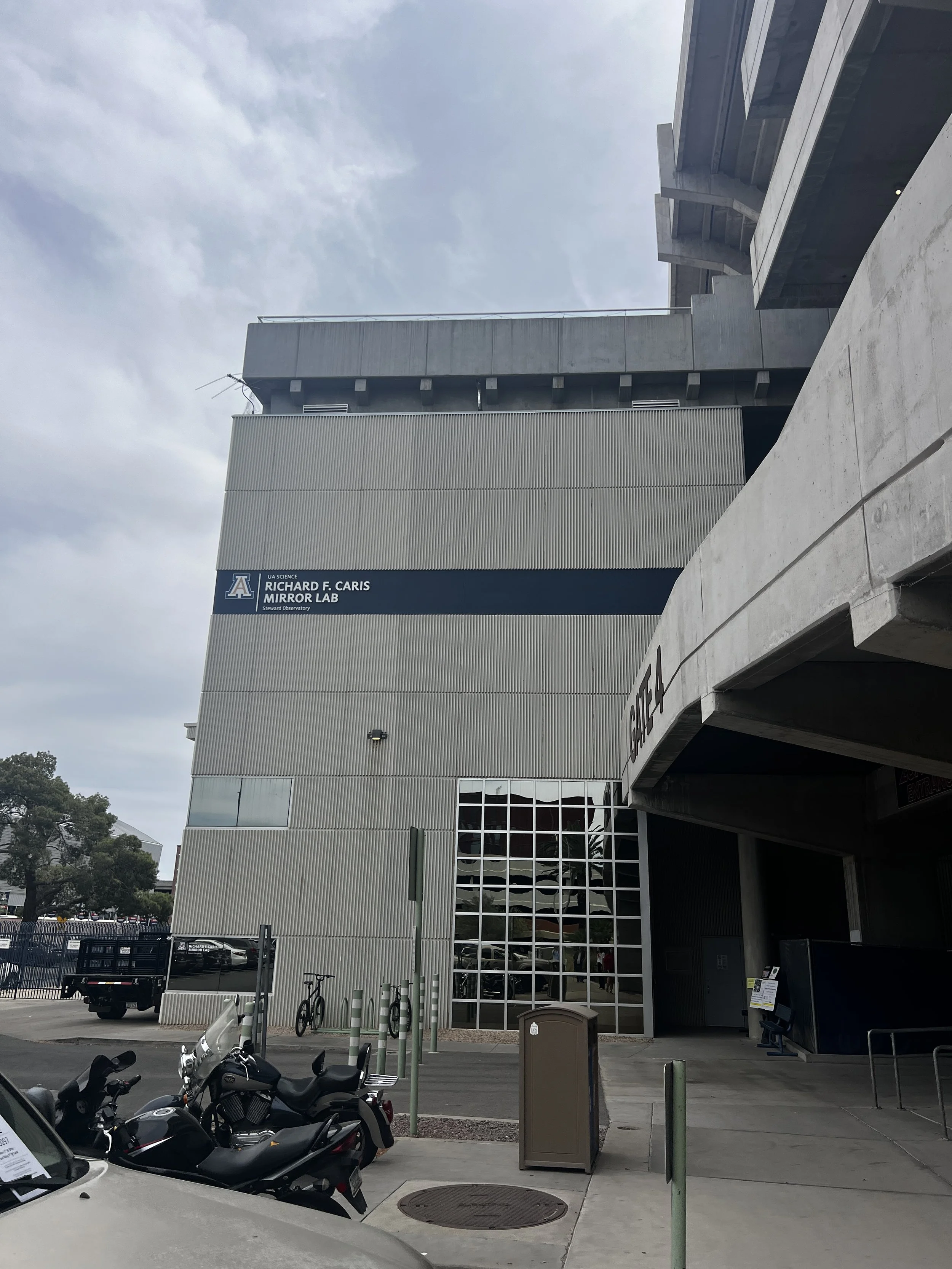
The Richard F. Caris Mirror Lab was purpose-built onto the side of the University of Arizona Football Stadium. The stadium provided a load bearing wall that could support the furnace, infrastructure for manufacturing the massive mirrors weighing 40,000 pounds each and the mirrors themselves. The Stadium also provides a bulk of the electric load needed to run the kiln for months at a time. The stadium provides 500,000 watts of the 1,000,000 watts needed to fire the kiln. The mirror Lab also has two 500,000 watt generators. One is used in conjunction with the available load from the stadium and the other is on standby in the case that a power outage occurs during the firing.
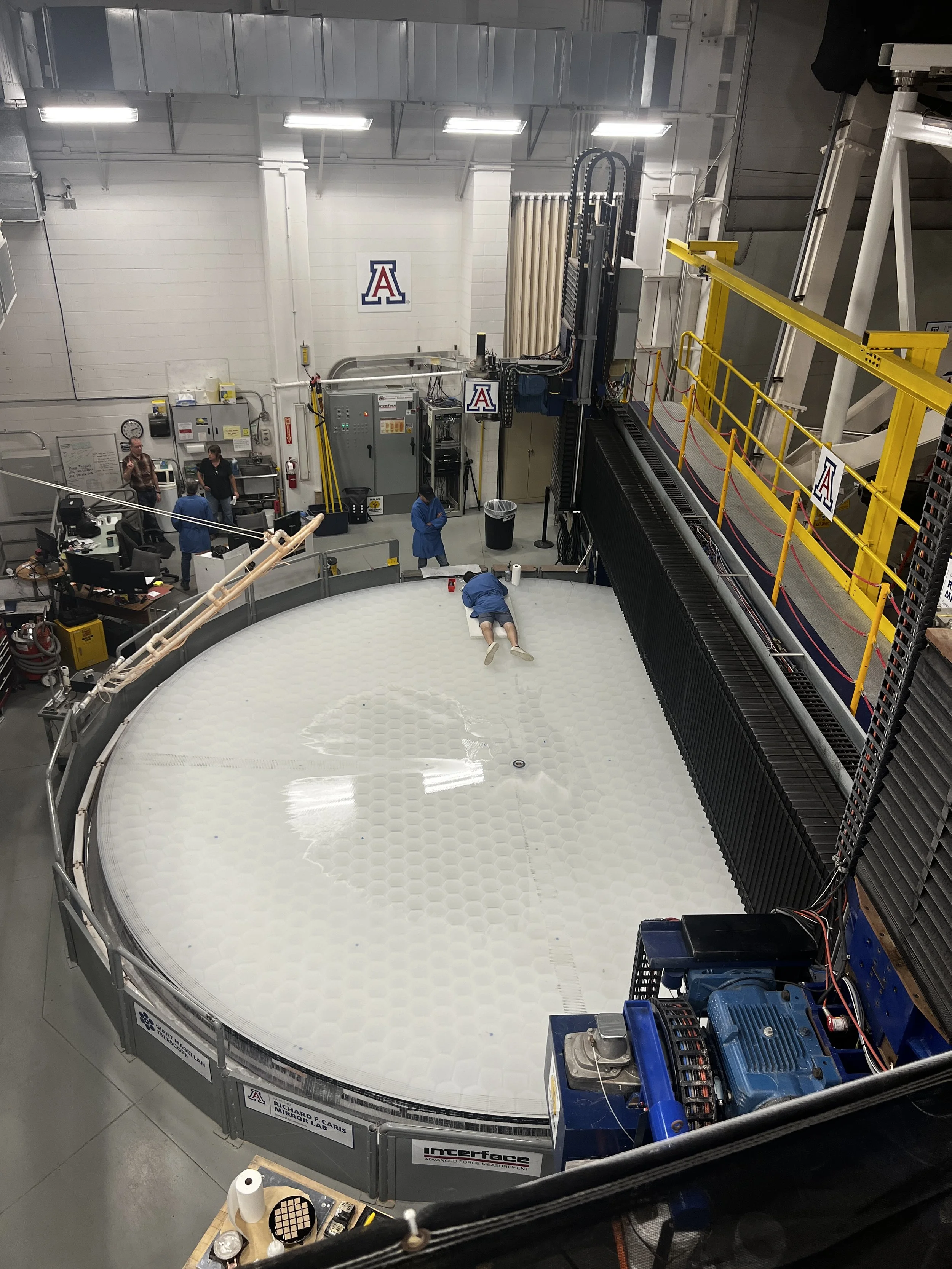
A technician is working the surface of one of the 7 mirrors for the Giant Magellan Telescope (GMT). This mirror is #5 of 7. Each mirror is 8.4 meters in diameter and is cast from 40,000 pounds of E6 Borosilicate glass. this special low expansion glass mixture is made by Ohara Glass in Japan exclusively for the Mirror Lab.
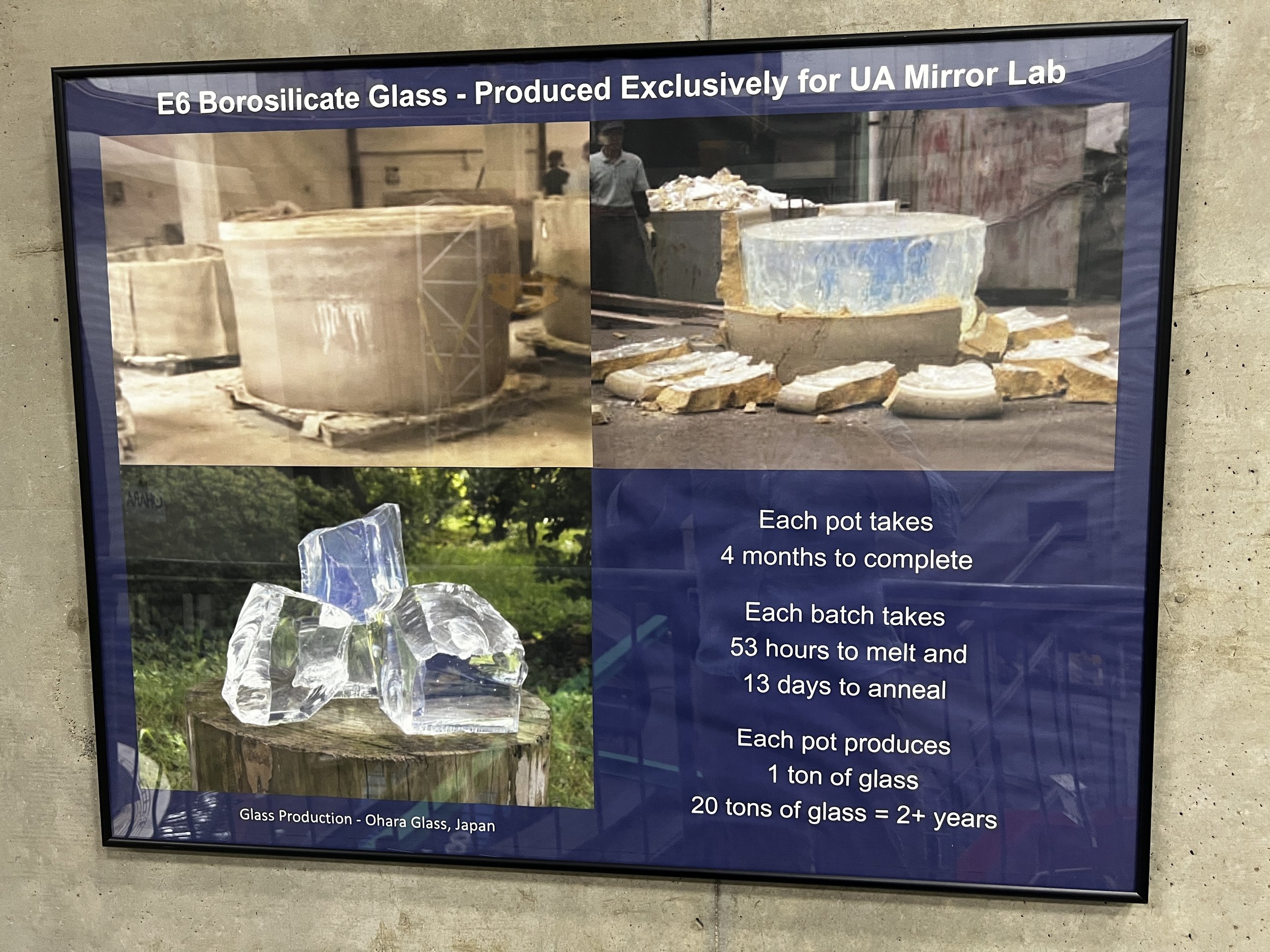
At Ohara Glass in Japan, workers first hand make the large clay crucibles used for melting the special E6 glass formula. Each pot holds 1 ton of glass and costs about $1,000,000. 1 large mirror casting uses 20 pots of glass costing $20,000,000 in glass alone. Each mirror costs $30,000,000 in total. There are 7 mirrosr in the Giant Magellan Telescope (GMT).
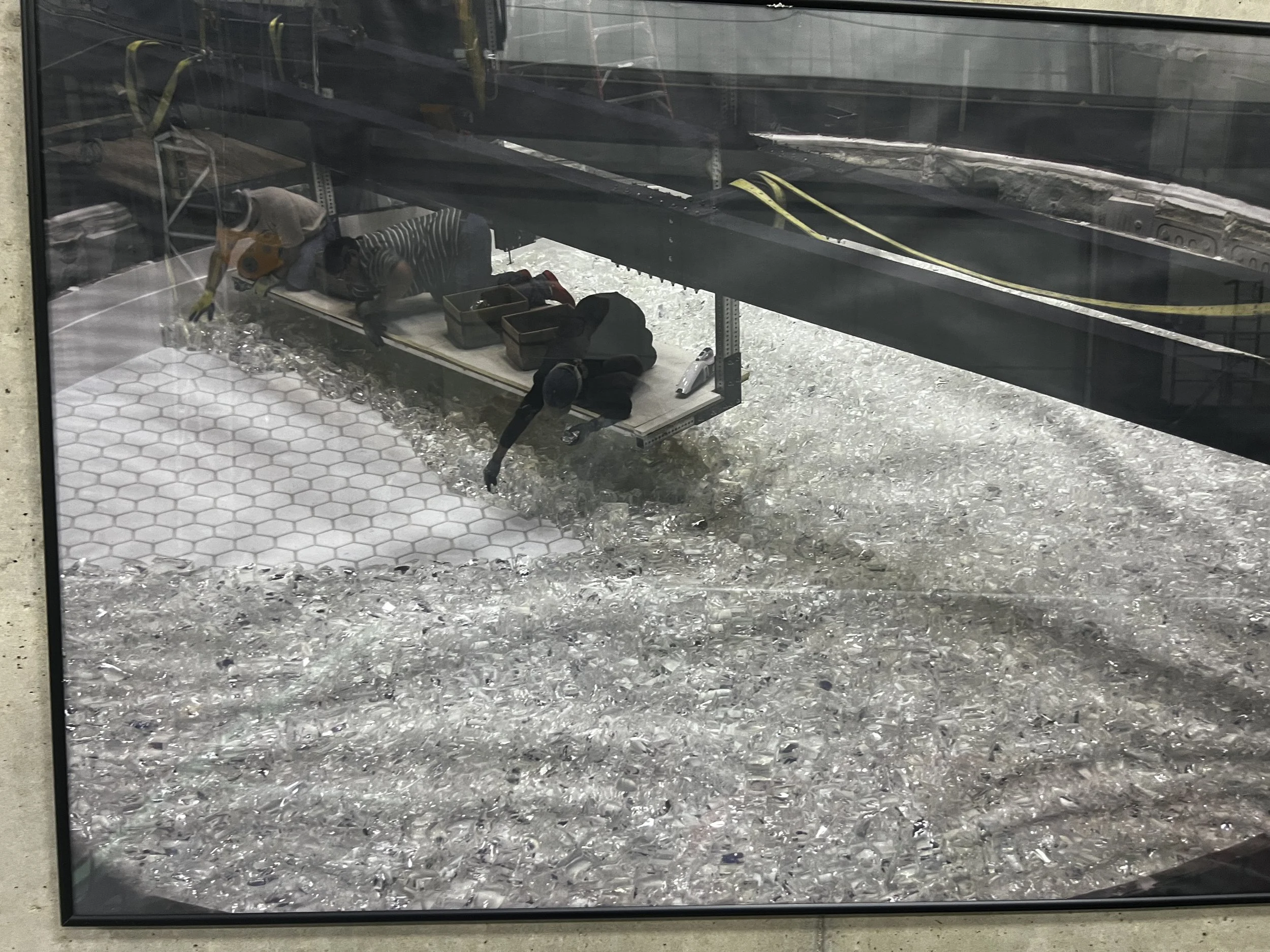
Workers load E6 borosilicate glass on top the surface of the honeycomb mold. The cores of the mold are made from ceramic fiber. The gaps between the cores are 12mm wide - this is where the glass will flow to form the hollow core honeycomb structure of the mirror.
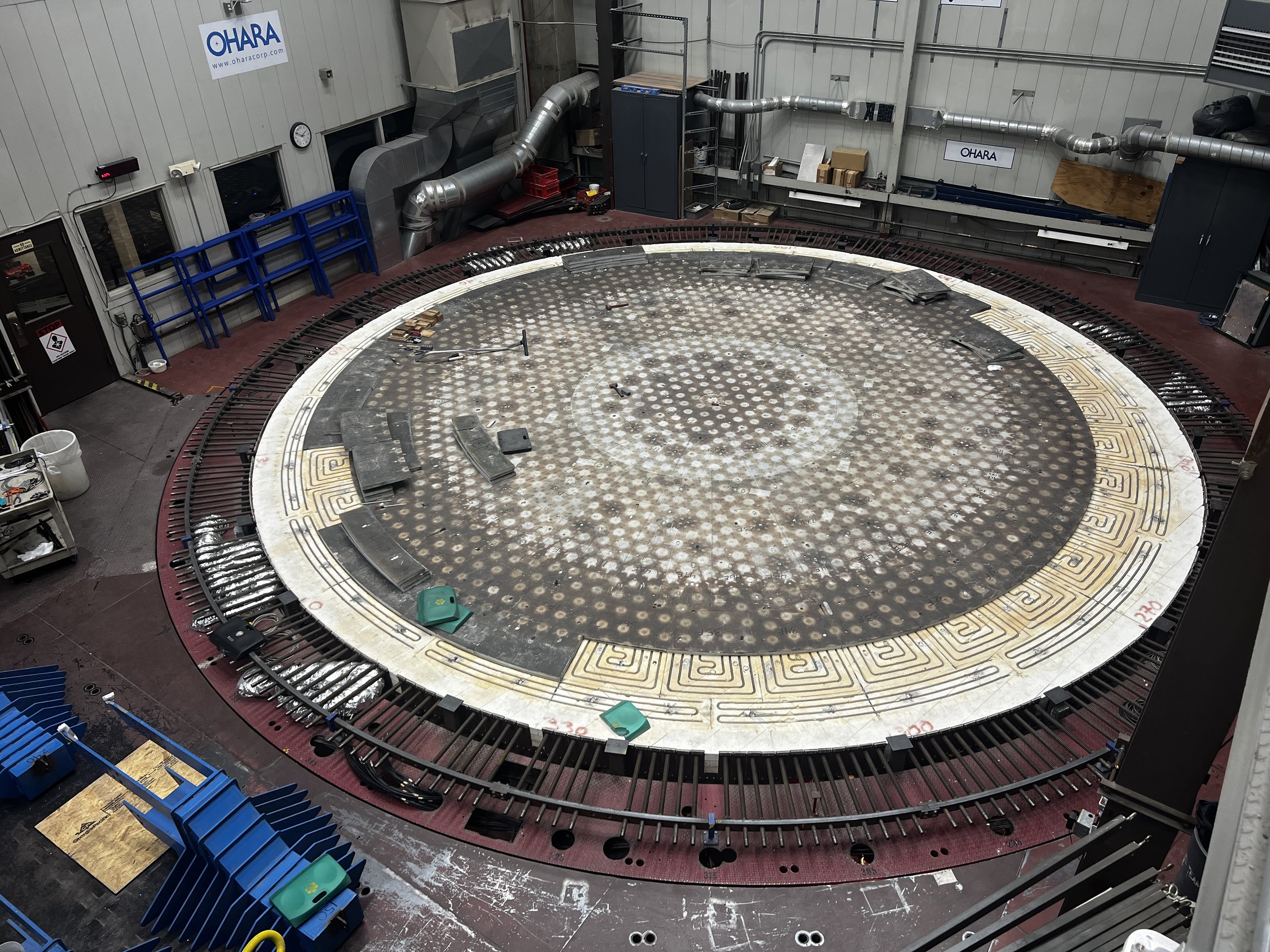
A view looking down onto the massive furnace bed after the furnace was recently broken down to remove the latest mirror casting for the GMT. The floor gets constructed, then the mold gets built and the furnace walls are installed around the mold. Next the mold gets filled with glass and the lid of the kiln gets installed before heating the kiln and eventually rotating to help generate the concave parabolic shape of the mirror blank.
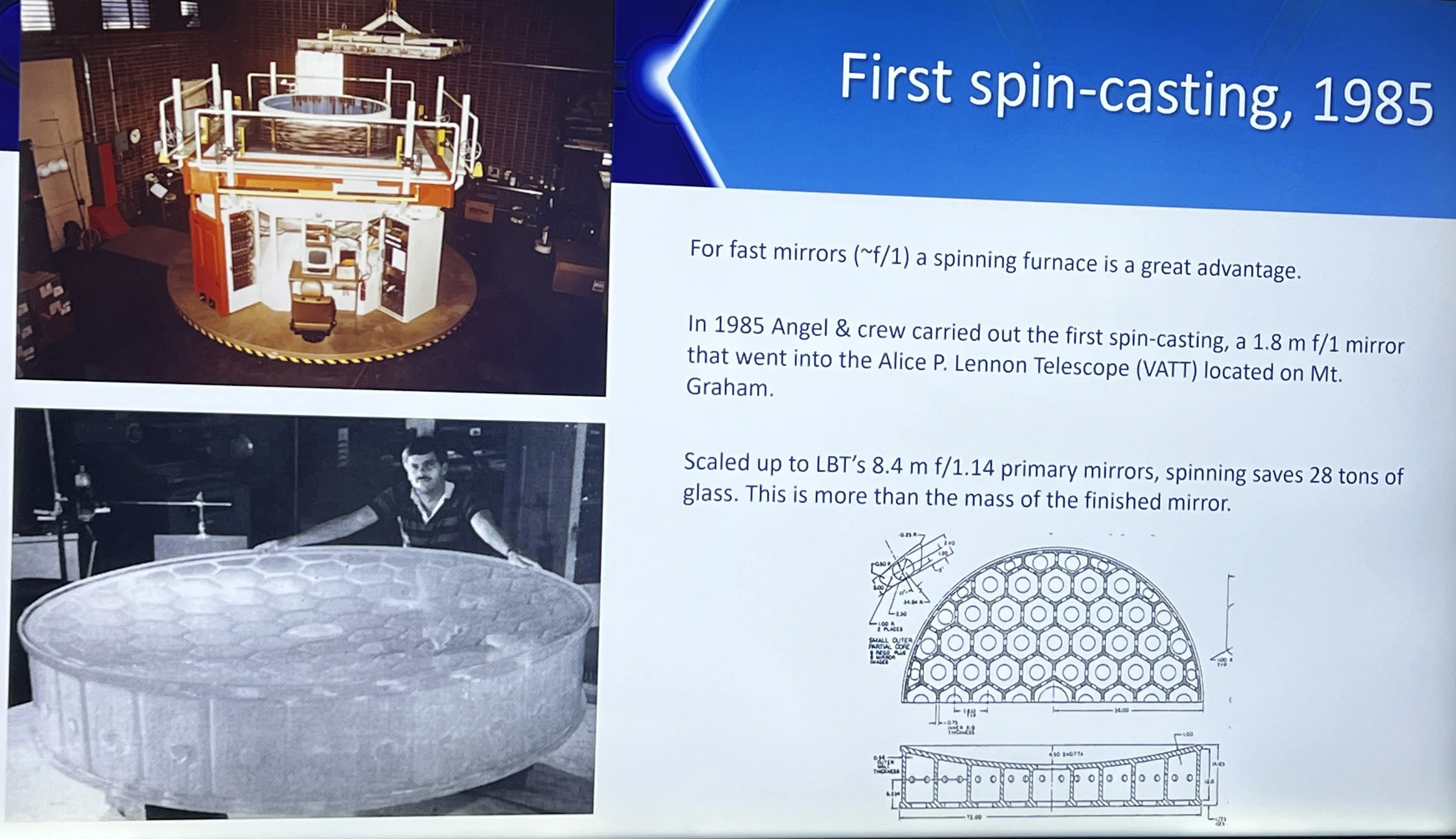
This form of spin casting large honeycomb shaped open cell mirrors was developed by Roger Angel. The process helps save up to 28 tons of glass that would otherwise have to be ground away from the surface to generate the necessary curve. This image is of a slide shown to tour members before the tour of the facility.
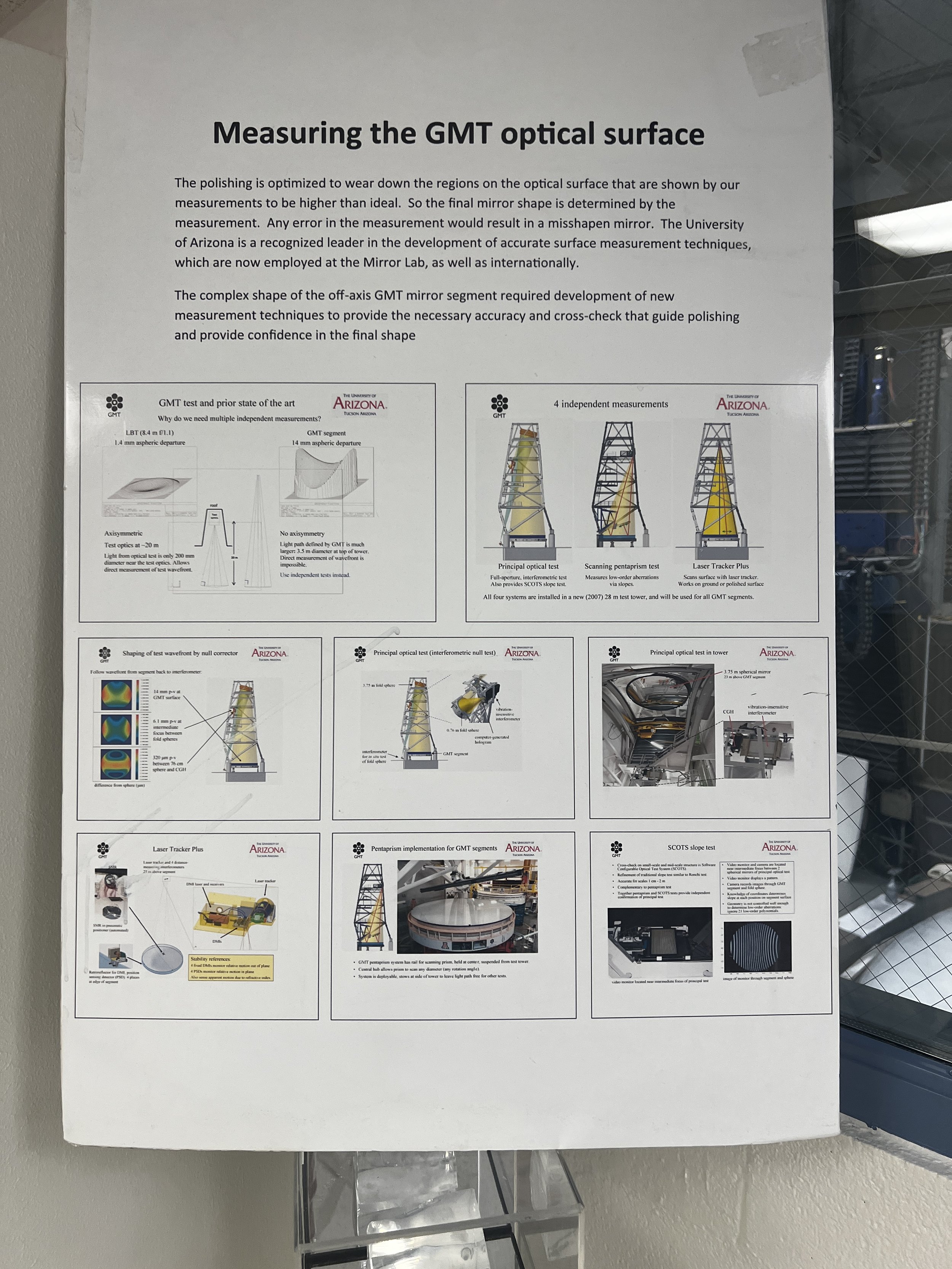
A description of the complex testing system which tests in four ways:
1.Full Aperture Interferometric
2.SCOTS Slope Test
3.Scanning Pentaprism Test
4.Laser Tracker Plus
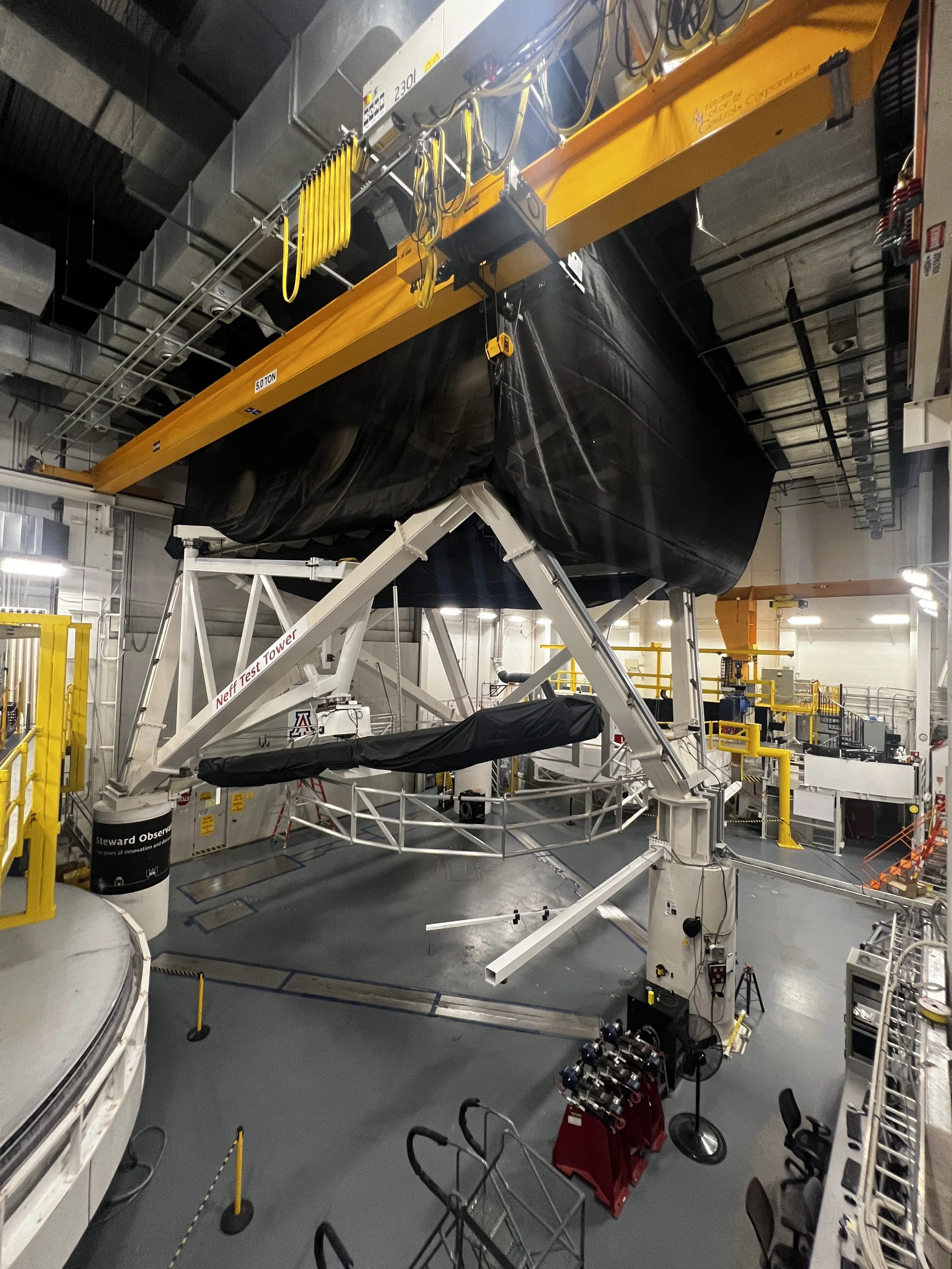
The base of the 100 ft. tall vertical testing platform that allows for 4 types of testing:
Here’s a video of the process of casting an 8.4 meter diameter mirror for the University of Arizona Research and Partnerships YouTube page.
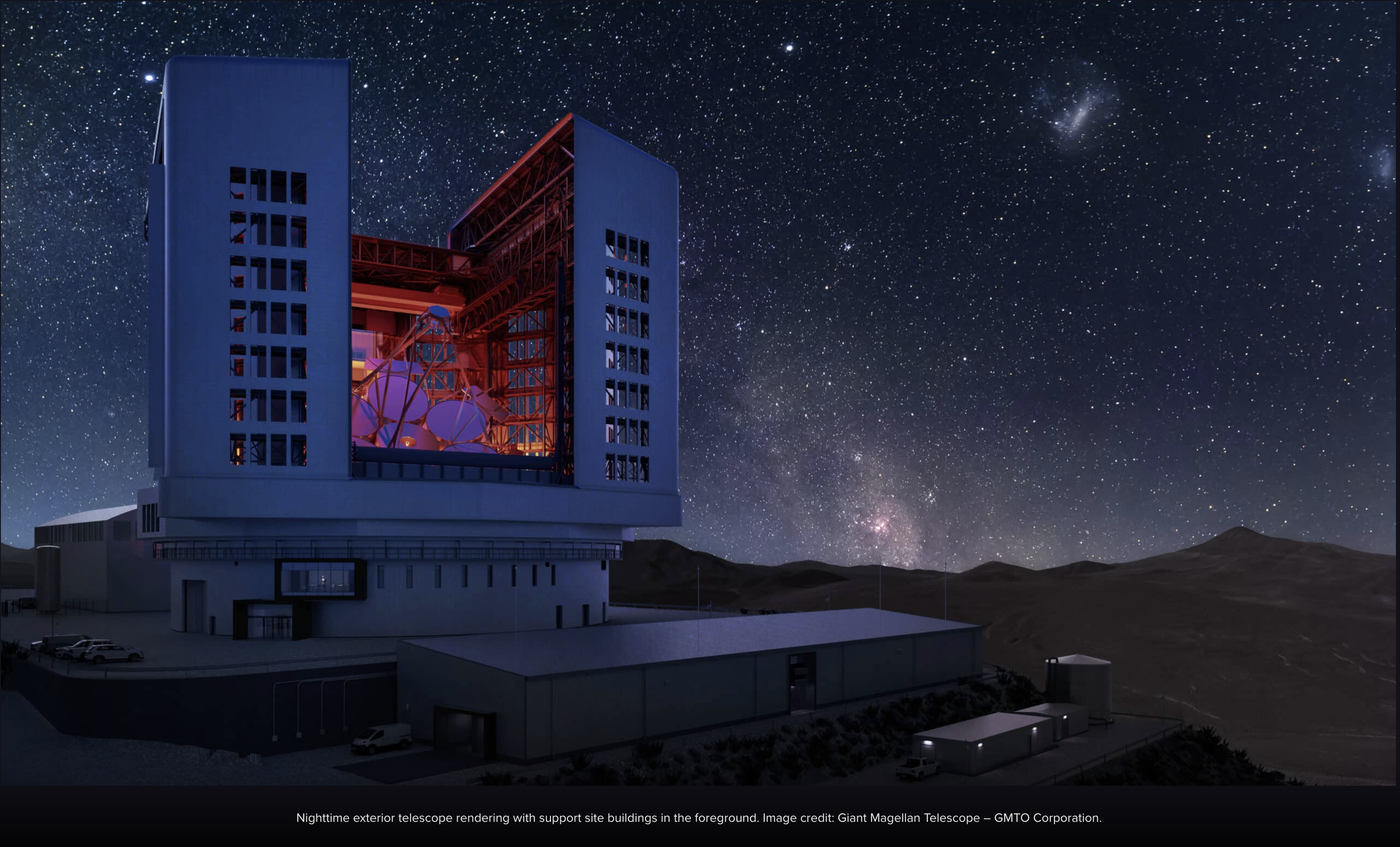
Here’s a rendering of the Giant Magellan Telescope which is being built in the Atacama Desert in Chile. More info can be found on the Giant Magellan Telescope Website